
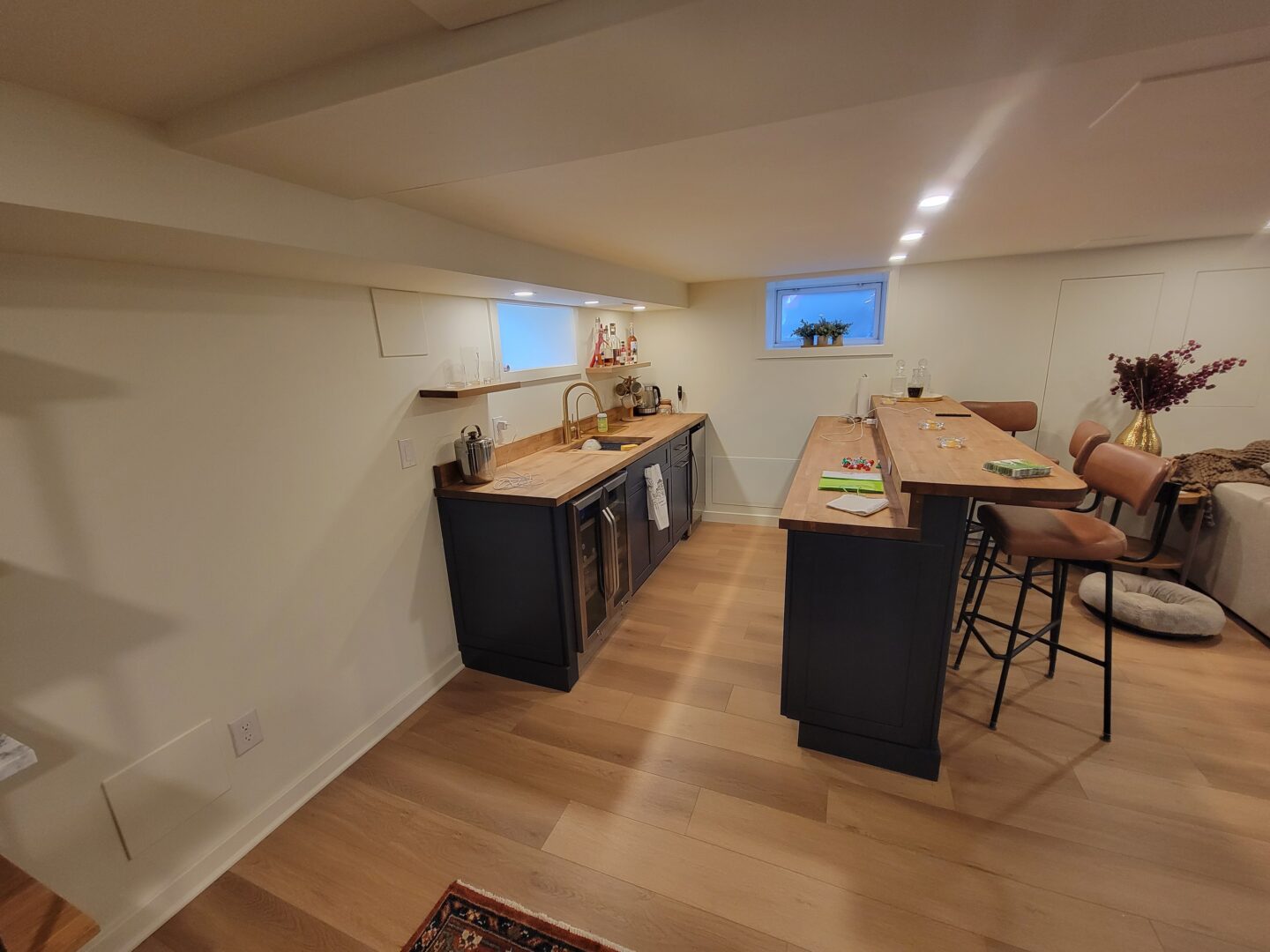
A basement can offer valuable living space, but limited natural light can make the lower level feel closed off or unfinished. The right design choices can change that impression. Rose Tree Construction helps you use lighting, finishes, layout, and architectural details to create a basement that feels comfortable and connected to the rest of your home.
If you are wondering how to make your basement brighter without stripping away warmth or character, the answer starts with a coordinated plan. Light sources, surface colors, ceiling treatments, and room arrangement all influence how open the space feels.
Why Do Some Basements Feel So Dark?
Basements often have smaller windows, lower ceilings, and fewer direct sources of daylight than rooms above grade. Dark flooring, heavy wall colors, and bulky partitions can make the effect stronger.
The goal is not to make every surface white. A brighter basement comes from balancing light reflection, visual openness, and comfortable finishes so the room still feels inviting.
How Can Layered Lighting Change the Space?
One overhead fixture is rarely enough for a finished basement. Recessed ceiling lights can provide broad illumination, and wall sconces or lamps can add softer light around seating areas, work zones, and hallways.
Task lighting also matters in areas used for reading, hobbies, exercise, or food preparation. Placing different light sources throughout the room helps reduce dark corners and gives you more control over the atmosphere at different times of day.
Which Wall Colors Help a Basement Feel Brighter?
Soft, light-reflective colors can make walls feel farther apart and help artificial light travel through the room. Warm whites, creams, light taupes, pale greens, and muted blues can brighten the basement without creating a cold appearance.
The undertone matters as much as the color itself. A warmer paint choice can work well in a basement with little daylight because it offsets the cooler quality that some artificial lighting can create.
What Flooring Choices Work Well in a Dark Basement?
Flooring covers a large visual area, so it has a strong effect on the overall mood. Light or medium wood tones, warm luxury vinyl, and softer neutral flooring can keep the room grounded without absorbing too much light.
A very dark floor can still work when the walls, ceiling, and lighting plan balance it. Rose Tree Construction considers flooring in relation to the full palette so each material contributes to a cohesive room.
Can an Open Layout Make a Basement Feel Lighter?
Removing unnecessary visual barriers can allow light to travel farther across the basement. Open family rooms, connected recreation areas, and wider passages between zones often make a lower level feel larger and less enclosed.
A completely open plan is not required. Partial walls, columns, cabinetry, and furniture placement can define separate uses without cutting the room into a series of small, dark spaces.
How Can Glass Help Distribute Light?
Glass doors and interior panels can separate rooms without blocking light. They work particularly well for offices, gyms, hobby rooms, or enclosed spaces that need privacy without feeling isolated.
Clear or lightly textured glass can also add visual depth. Used selectively, it creates separation and lets nearby lighting contribute to more than one area.
What Ceiling Treatments Make a Basement Feel More Open?
Ceiling height has a major effect on how bright a basement feels. A clean ceiling with a light finish can draw the eye upward and reduce the sense of enclosure.
Drywall ceilings can create a seamless appearance, and carefully planned soffits can conceal mechanical systems without dominating the room. Keeping ceiling details simple also gives lighting fixtures a cleaner backdrop.
How Can Windows and Exterior Openings Improve Natural Light?
Existing basement windows should be treated as valuable light sources. Window wells that are clean, open, and finished in lighter materials can help more daylight reach the room.
Some remodeling projects may allow for larger windows or new egress openings depending on the structure and local requirements. These changes can improve both light and how connected the basement feels to the outdoors.
How Should Furniture Be Arranged in a Brighter Basement?
Large furniture placed directly in front of windows or across important sightlines can make a basement feel tighter. Keeping taller pieces against solid walls helps preserve openness and lets light move through the room.
Furniture scale also matters. A few appropriately sized pieces often work better than filling every open area. Strategic placement gives each zone a purpose without creating visual clutter.
Can Built-In Storage Reduce Visual Clutter?
Storage has a direct effect on how bright and organized a basement feels. Open piles of games, equipment, media, and household items can make a lower level appear busier and smaller.
Built-in cabinets, low-profile shelving, and concealed storage give everyday items a defined place. A broader range of basement design concepts can help connect storage choices with entertainment, work, fitness, and family spaces.
How Can the Basement Match the Rest of the Home?
A basement tends to feel darker when it looks disconnected from the rooms above it. Repeating familiar flooring tones, trim profiles, door styles, hardware, or paint colors can create a stronger visual relationship between levels.
Rose Tree Construction carries that thinking through custom lower-level renovation work so lighting, layout, storage, and finishes support one complete design rather than a collection of separate upgrades.
What Decorative Details Add Brightness Without Looking Stark?
Reflective and textured materials can help distribute light without making the room feel overly polished. Mirrors, satin-finish hardware, lighter artwork, and subtle glass accents can introduce brightness in controlled amounts.
Rugs, upholstered furniture, wood details, and soft window treatments can then add warmth. This balance is useful when deciding how to brighten up a basement and still create a room where people want to spend time.
How Do Different Basement Uses Affect the Lighting Plan?
A home theater needs different lighting than a gym, office, play area, or guest room. Planning each zone around its purpose prevents the basement from relying on the same brightness level everywhere.
Dimmers can support movie nights and entertaining, and brighter task lighting can serve desks or workout areas. Matching lighting to activity makes the entire level more functional without flooding every corner with intense light.
What Makes a Brighter Basement Feel Complete?
Learning how to make a basement brighter is really about combining several design decisions. Better lighting has more impact when it works with lighter surfaces, clear sightlines, practical storage, and finishes that fit the rest of the home.
Rose Tree Construction can develop a basement around the way you plan to use it, from casual family space to a more customized lower level. For a room that feels brighter, more useful, and connected to the rest of your home, contact Rose Tree Construction today.