
If you’re entering your golden years, you might prefer to stay in a familiar space for as long as possible rather than move. A well-planned approach to the layout of your home can make that possible.
With thoughtful updates, a home can evolve to meet your changing needs while still feeling warm and inviting.This aging in place checklist outlines home features that support comfort, independence, and long-term accessibility.
What Does Aging in Place Design Mean?
Aging in place design focuses on safety, usability, and comfort. This approach to laying out a home aims to simplify daily tasks while still keeping the home visually appealing. Small improvements can offer immediate benefits, but larger updates often support mobility for many years.
Many homeowners choose to work with remodelers who understand accessibility needs. Luxury home renovations often use long-lasting materials, smart layouts, and subtle features that help homeowners enjoy their space with fewer barriers.
In many cases, a remodeling professional also helps homeowners navigate product choices, materials, and layout options that fit both the home and the long-term plan. This guidance becomes especially helpful when dealing with older floorplans that were never designed with accessibility in mind.
Simple Aging in Place Checklist
A room-by-room review of your home will help you identify the areas most in need of attention. This checklist gives a practical guide for evaluating each part of your space.
Entrances and Doorways
A safe entry is one of the most important foundations of aging in place planning. You will need step-free access to all of your home’s main areas, wide doorways, a motion sensor or bright porch lighting, and, ideally, lever-style door handles that are easier to operate. Many of these updates become part of larger improvement plans for home remodeling in Wayne, PA because structural changes often work best when handled together.
Hallways and Flooring
Hallways should allow easy movement without obstacles. Look for even flooring, clear lighting, handrails in any places where additional support may help, and, if necessary, removal of rugs that slide or bunch up.
Kitchen Layout and Storage
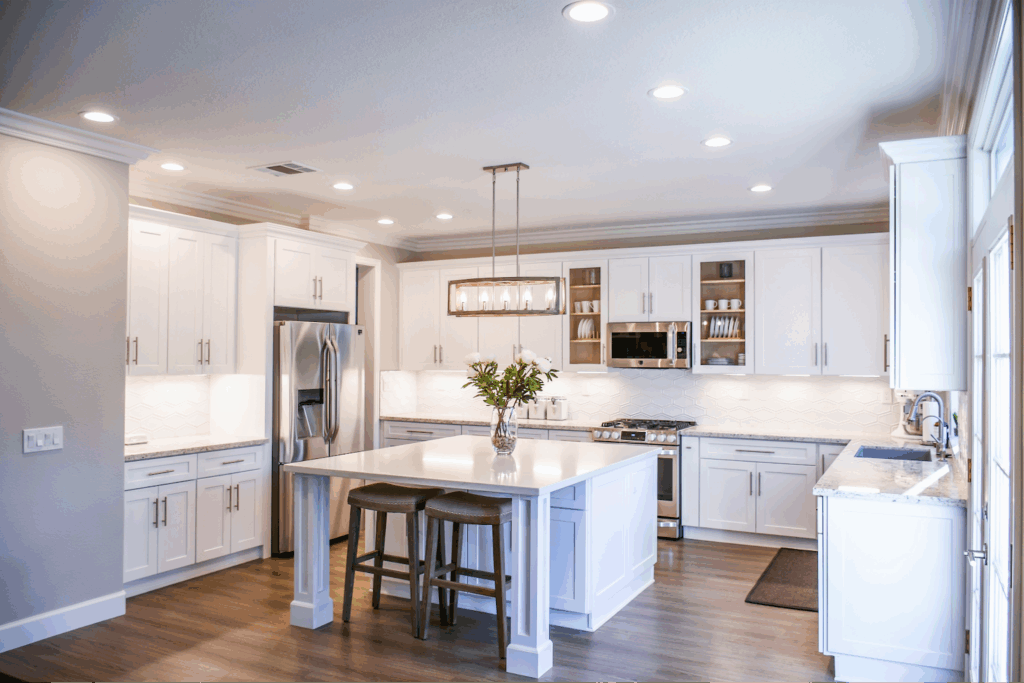
A kitchen is one of the most active rooms in any home. Aging in place house designs often feature storage that avoids deep bending, pull-out bins and drawers, appliances with visible controls, and open walking paths.
A little goes a long way in a space like the kitchen. Even small improvements, such as better lighting or reorganized cabinets, can make food preparation much easier. Homeowners sometimes add task lighting beneath cabinets or replace standard knobs with easier-to-grip handles. These small updates may look simple, but they can create meaningful changes in how comfortably someone uses the kitchen each day.
Bathroom Safety and Accessibility
Bathrooms often require the most attention because of tight layouts and slippery surfaces. A strong aging in place bathroom design can include a walk-in shower with a grab bar and handheld showerhead, anti-slip flooring, and a raised toilet.
These updates often integrate well into luxury home renovation projects where homeowners combine comfort and style with long-term planning. Many families also choose to install shower seating or widen bathroom doorways to increase safety and convenience.
Bedroom Layout and Comfort
Bedrooms should support restful routines. Aim for a bed height that simplifies sitting and standing, open pathways around the entire room, adequate lighting for navigating at night, and a stable nightstand for essentials.
If mobility changes later, a first-floor space can serve as a future bedroom. Other improvements like blackout curtains, remote-controlled lighting, or larger closet openings, contribute to an easier daily routine.
Lighting Throughout the Home
Lighting plays a major role in safety. Think about providing your home with consistent brightness through switches that are easy to use. Nightlights in hallways can help as well, as can window coverings that let in plenty of daylight.
Improved lighting also reduces eye strain and helps the home feel more comfortable overall. Some homeowners decide to upgrade to LED fixtures with dimming controls to support different lighting needs throughout the day.
Stairs and Multi-Level Living
Multi-level living can be challenging over time. If your home has stairs, make sure they have handrails on both sides. Also, consider improving the lighting setup around the stairs to make each step ultra-visible. Slip-resistant treads on steps can improve safety as well. You may also want to make sure that you have space for the addition of a stair lift in the future.
Planning ahead for areas with stairs will help your home stay functional even as needs shift.
Outdoor Spaces and Maintenance
Outdoor areas will also need some attention aging in place. Make sure that your walkways are level and have easy-to-use railings. In addition, your outside walking areas should be well-lit and free from any major tripping hazards.
These improvements may seem small, but they will support confidence when moving around the property. You can also add benches near entrances, raised garden beds, or wider walkways to improve accessibility and comfort.
Technology and Smart Home Features
Adding smart features to your home can make it easier to move around and get things done as you age. Implementing voice-activated lighting can save you the trouble of using a switch, and a smart thermostat allows you to control the temperature from your phone.
In addition, tools like doorbell cameras — and full-fledged security systems — can help you feel confident and know when to ask for help in a risky situation. If your home does not already have some form of security monitoring, consider adding one for peace of mind.
When Simple Upgrades Aren’t Enough
Some homes require more substantial changes to support long-term needs.
Narrow bathrooms, older stair designs, and tight hallways may need structural updates. A professional remodeler can help determine which areas offer the greatest benefit and how these improvements fit the overall design. Larger updates often reshape the home in a way that feels more open, balanced, and comfortable for everyday life.
A full renovation can also help the entire layout work together more efficiently. If you choose this route, you can create a cohesive, comfortable space that supports mobility without sacrificing style.
Make Your Space Ready for Aging in Place With Rose Tree Construction
Aging in place planning gives you the freedom to enjoy your space at every stage of life. Whether you are beginning with small changes or preparing for more significant remodeling, each improvement on our list will bring your home closer to long-term usability.
For guidance on creating a space that supports your future needs, contact Rose Tree Construction today.