
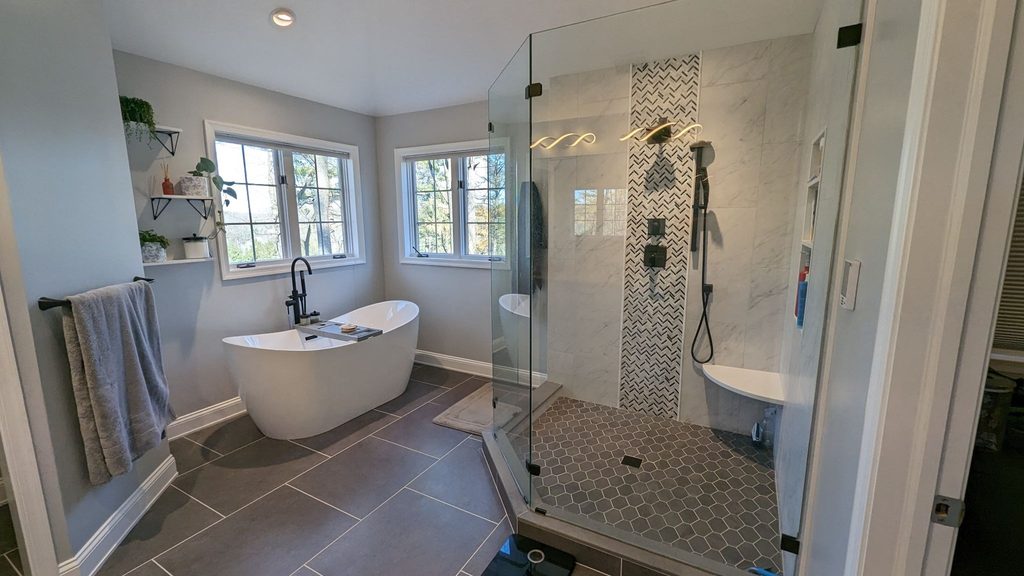
A bathroom remodel can change one of the most frequently used rooms in your home, but the work involves several stages that need to happen in the right order. Planning, demolition, plumbing, electrical work, waterproofing, tile, fixtures, and final details all contribute to the schedule.
Rose Tree Construction helps you understand the process before construction begins so the timeline feels clear from the start.
So, how long does a bathroom remodel take? There is no single answer for every project. A smaller update may move quickly, and a complete primary bathroom renovation with layout changes, custom materials, or extensive tile work can take considerably longer. The scope of work matters more than room size alone.
What Happens Before Construction Begins?
The timeline starts before demolition. Design decisions, measurements, material selections, budgeting, and permit requirements need to be addressed before the room is taken apart.
Rose Tree Construction works with you to define the layout and select major materials early. Vanities, plumbing fixtures, tile, lighting, and shower glass can affect the schedule, especially when products require longer lead times.
How Long Does Planning and Design Take?
Planning may take several weeks depending on the size and complexity of the project. A straightforward renovation that keeps fixtures in their existing locations usually requires less design work than a project that changes the entire layout.
This stage is also the right time to settle important details. Finalizing selections before construction helps reduce pauses later and gives the project team a clearer sequence for ordering and installation.
When Do Permits Fit Into the Timeline?
Permit requirements depend on the municipality and the type of work being completed. Plumbing, electrical, structural, and mechanical changes may require approvals or inspections before certain phases can continue.
Rose Tree Construction factors local requirements into project planning so permit steps can be coordinated with the construction schedule. The amount of review time varies, so it is helpful to address this before a start date is set.
How Long Does Demolition Usually Take?
Demolition is often one of the faster stages of a bathroom remodel. Removing the vanity, fixtures, flooring, tile, drywall, or an old tub may take a few days depending on the scope.
This phase can also reveal conditions that were hidden behind finished surfaces. Water damage, outdated plumbing, subfloor issues, or framing concerns may need to be corrected before new work begins.
What Happens During Plumbing and Electrical Work?
Once the room is opened, rough plumbing and electrical work can begin. New fixture locations, outlets, lighting, exhaust fans, shower controls, and other systems are installed or adjusted at this stage.
Keeping the existing layout can simplify this phase. Moving a toilet, sink, tub, or shower often requires more extensive work because supply lines, drains, venting, and electrical locations may need to change.
How Much Time Does Waterproofing and Tile Require?
Bathrooms depend on proper moisture protection, so waterproofing should never be treated as a step to rush. Shower walls, floors, and other wet areas need the correct preparation before tile is installed.
Tile itself can also take time because layout, cutting, setting, grouting, and curing happen in sequence. A bathroom with extensive wall tile, detailed patterns, niches, or a custom shower may require more installation time than a simpler design.
When Are the Vanity and Fixtures Installed?
Once the major wall and floor work is complete, the room begins to look finished. The vanity, countertop, toilet, faucets, lighting, mirrors, hardware, and accessories can be installed during the later stages.
Custom countertops or shower glass may involve measurements taken after surrounding finishes are complete. That sequencing is one reason early material planning is valuable even when installation happens near the end.
What Can Extend a Bathroom Remodel Timeline?
Material delays are one common factor. Custom vanities, specialty tile, plumbing fixtures, shower glass, and other made-to-order items can affect when a particular stage can begin.
Changes made after construction starts can also add time. A new fixture choice or layout adjustment may affect plumbing, electrical work, cabinetry, or tile that has already been planned.
Hidden conditions can influence the schedule too. An experienced remodeling team can evaluate the issue, explain the available options, and adjust the project plan before moving forward.
Does a Small Bathroom Always Take Less Time?
A smaller room does not automatically mean a much shorter project. Many of the same trades and construction steps are needed whether the bathroom is compact or spacious.
A small hall bathroom with a complete layout change may require more coordination than a larger bathroom that keeps the existing plumbing locations. Scope, materials, and design complexity are better indicators of timeline than square footage by itself.
How Can You Help Keep the Project on Schedule?
Making major selections before construction starts is one of the best ways to support an organized timeline. Having tile, fixtures, cabinetry, and other important materials identified early gives the project team more control over sequencing.
It also helps to make decisions promptly when questions come up. Clear communication between you and Rose Tree Construction keeps approvals and adjustments moving without unnecessary gaps.
Why Does Professional Project Management Matter?
A bathroom remodel brings several trades into a relatively small space. Plumbers, electricians, tile installers, carpenters, painters, and other specialists often depend on the previous phase being completed before their work can start.
Working with experienced bathroom remodel contractors gives the project a coordinated schedule instead of leaving you to organize each trade independently. Careful sequencing supports both quality work and a more predictable renovation experience.
How Does the Scope Change the Timeline?
A cosmetic update and a complete renovation are very different projects. Replacing a vanity, lighting, paint, and hardware requires fewer stages than rebuilding a shower, moving plumbing, replacing flooring, and changing the room layout.
Rose Tree Construction approaches custom bathroom renovation work according to the actual scope of the room. Understanding the level of work before construction starts creates a more useful timeline than relying on a generic estimate.
What Happens During the Final Stage?
The last stage includes finish work, final adjustments, cleaning, and any required inspections. Fixtures are tested, hardware is checked, and small details are addressed before the bathroom is ready for regular use.
A final walkthrough also gives you the opportunity to review the completed room and ask questions about materials, fixtures, or care.
Plan Your Bathroom Remodel With a Clear Timeline
Understanding how long does a bathroom remodel take starts with looking at the complete project, not just the days spent on demolition or installation. Design, ordering, permits, construction, inspections, and final details all contribute to the schedule.
Rose Tree Construction can help you define the scope, organize the design, and build a realistic plan around your bathroom and goals. Talk with Rose Tree Construction today about your bathroom remodel to take the next step toward a renovation built around quality craftsmanship and careful coordination.